Table Of Content

That's why keratin treatments, aka Brazilian keratin treatments (BKT for short) and Brazilian straightening treatments, have become increasingly popular among those looking for straight, sleek, and frizz-free hair. You do not want to chemically straighten your hair while you're pregnant or trying. Exposure to formaldehyde could affect your fertility or lead to miscarriage when you're pregnant, according to the Centers for Disease Control (CDC). It's why stylists like O'Toole refuse to treat pregnant women — and worry about the chemicals in general. The jury is out on whether exposure can permanently affect your fertility.
Potential risks of keratin treatment
"If you have someone inexperienced who's going over the hair too many times with high heat that's too high for that texture, it can damage the hair." If you feel like your stylist is overdoing it, don't be afraid to speak up. Remember, the Brazilian Blowout is a specific brand name of an in-salon liquid keratin treatment, so you can't get a true Brazilian Blowout without a certified stylist. However, it is possible to create a similar result with a more DIY-friendly keratin treatment at home. We always lean towards putting these matters into the hands of a pro, especially with treatments that involve harsh chemicals like formaldehyde (as is the case with Brazilian Blowouts). When looking to get a real Brazilian Blowout using the brand's line of products, you'll want to go to a pro who's certified in performing these treatments and have a thorough consultation about your desires.
Stunning Straight Hairstyles for Square Faces
Chemical straightening doesn't deliver pin-straight hair for everyone. "For those with extremely coarse and kinky hair, I would tell them not to expect pin-straight hair from the treatments, but more of a loosening of the curl," O'Toole says. "If you have very fine hair, I probably wouldn't have recommended these treatments, because it would make your hair too flat and lifeless," she says.
More on Healthy Beauty
"Keratin coats the hair strand and sits on the top of the cuticle, whereas the relaxers and texturizers break down the chemical bonds of the hair," Dixon explains. While Brazilian Blowouts are meant to help take a lot of the work out of your styling routine, it's still important to use smoothing products like oils and leave-in conditioners that will help keep your hair feeling smooth and frizz-free. "Try keeping your product choices paraben- and sulfate-free where possible," Garwood advises. She also suggests looking for treatments that contain water-soluble silicones only. "Silicones give a glossy finish," she says, "but they can disguise underlying damage, so be careful that you're treating any hair damage correctly." As stated above, the temperature needs to be adjusted according to your hair texture.
Japanese Thermal Straightening
People love the Brazilian treatment because it makes coarse and frizzy hair super manageable. If you are used to needing to flat iron your hair on a day-to-day basis, the Brazilian straightening treatment will save you almost all of that time. Typically, the treatment lasts around two to four months and doesn’t break down the structure or internal bonds of your hair. If you have curly hair and want to give this treatment a go, you don’t have to worry too much about losing your curl pattern forever.
How to Give Yourself a Brazilian Blowout at Home
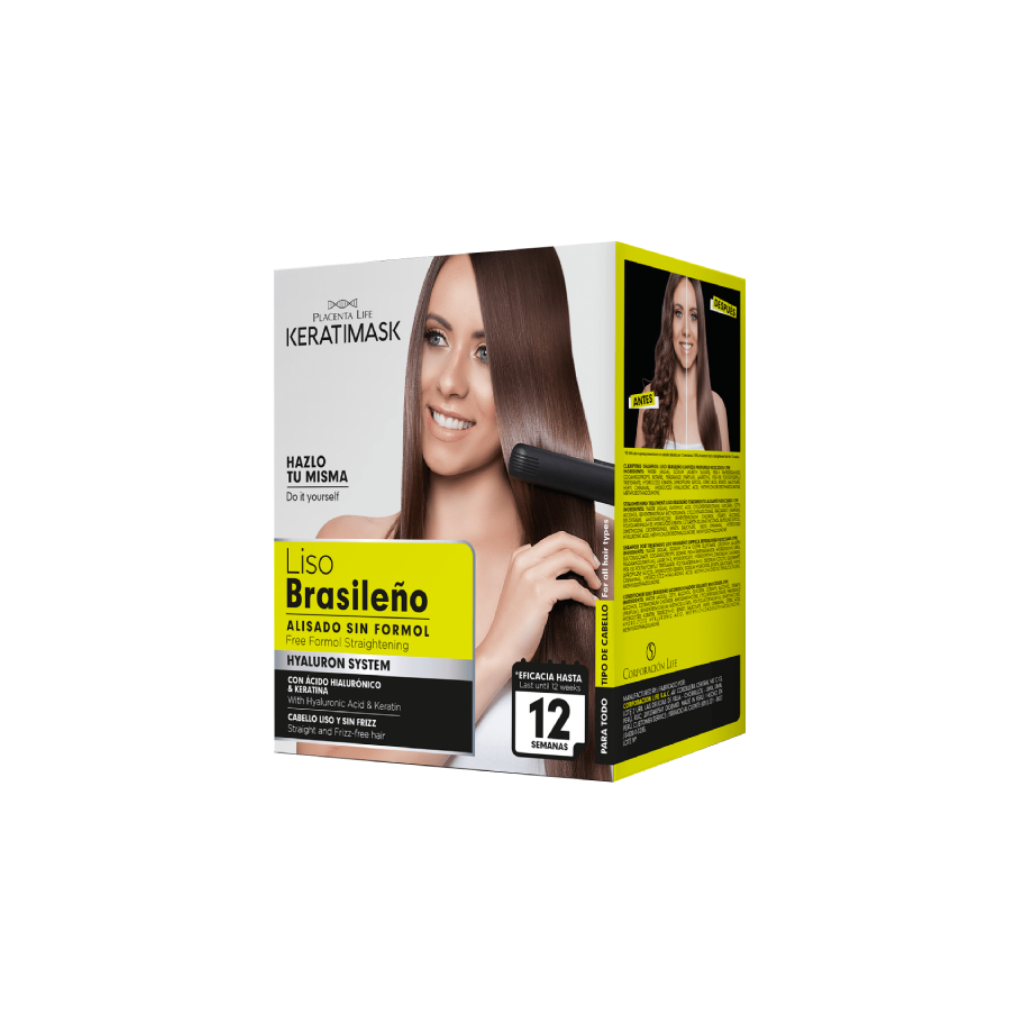
After your hair is saturated and the solution is evenly distributed to your hair, grab your blow dryer. This is the part that may cause dizziness or lightheadedness because the heat emits those potent chemicals into the air. According to Duenas, your blowout solution works best on porous hair. "Shampooing the hair three times allows the cuticle to open up so the product can be absorbed," she says. This last requirement is of the utmost importance, and as Duenas points out, it's likely the biggest risk you face by attempting this at home. "Without proper ventilation, it could cause irritation in the eyes." If you can, do this treatment outside for maximum airflow.
Keratin Treatment vs. Brazilian Blowout — Which One Should You Get? - InStyle
Keratin Treatment vs. Brazilian Blowout — Which One Should You Get?.
Posted: Tue, 16 Apr 2024 07:00:00 GMT [source]
Benefits of a Keratin Treatment
This is a form of straightening that usually happens on dry hair. Once hair is rough-dried with a blow dryer and a brush, Roque explains that you section the hair into small sections and go over them with a flat iron/straightener. "The look lasts as long as the hair can last before looking visibly dirty or until the next wash," says Ramos.
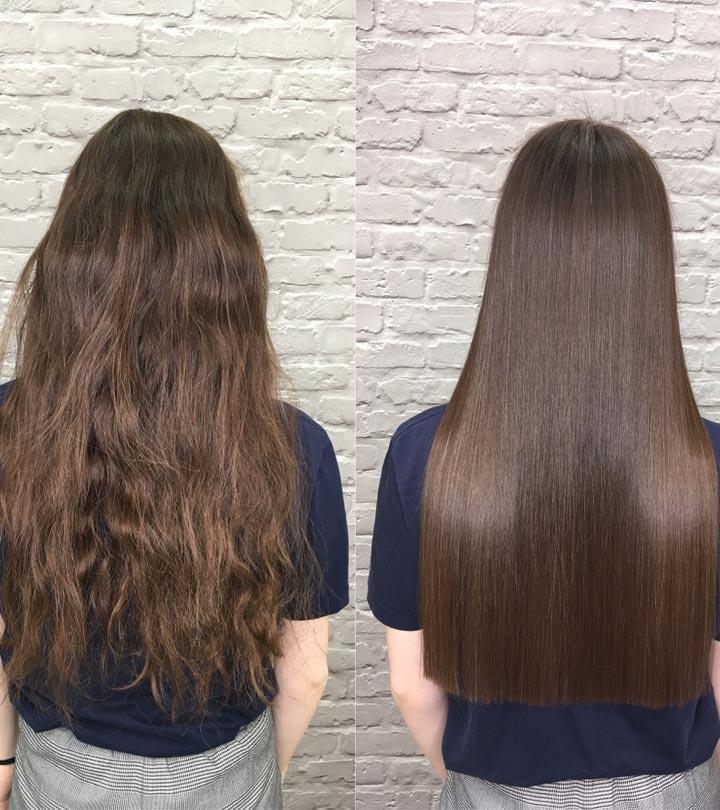
No matter how naturally straight your hair is, a blow dryer is a must to get it perfectly smooth. A flat iron is probably involved, too, especially if your natural texture is thick or curly. Your application essentially puts a keratin coat back into your hair shaft. Garwood tells us the keratin for these treatments is generally derived from animal horns, hooves, wool, etc.
Once the hair is processed with Japanese straightening chemicals, they are rinsed out and the hair is straightened by blow-drying and with a flat iron. Then a neutralizing solution is applied to stop the action of the straightening chemicals. If you have a sensitive scalp, or if you are sensitive to formaldehyde, it’s best to forego a Brazilian Blowout or similar keratin treatments. Keratin hair masks also use formaldehyde or formaldehyde-releasing chemicals to bond the keratin to your hair. Some newer keratin treatments may allow you to shampoo right away, but plenty do not.
"The longest I've ever spent doing a Brazilian blowout was around two hours, so it all depends on how much hair you have and how thick it is." Keep in mind that “permanent” doesn’t mean forever — it just refers to the duration of one life cycle of your hair. Speak to your hairstylist about your options, and what they think might be the best one for you. This means you’re walking around inhaling the chemicals used to treat your hair, and you’re exposing everyone near you to them. The treatments are expensive however, and the formaldehyde in many formulas can be dangerous if inhaled, so make sure you’re getting the treatment done in a well-ventilated area or choosing a formaldehyde-free formula.
More permanent straightening options like relaxers (sometimes called Japanese straightening) actually break hair bonds using the ingredients ammonium thioglycolate and sodium hydroxide. This makes for permanent results, but can also cause an awkward growing out phase with non-treated hair growing in curly at the roots. There are keratin treatments that are formaldehyde-free (they use glyoxylic acid instead) but they’re not quite as effective.




No comments:
Post a Comment